NZD/USD: Daily Range, Character and Trading Hours
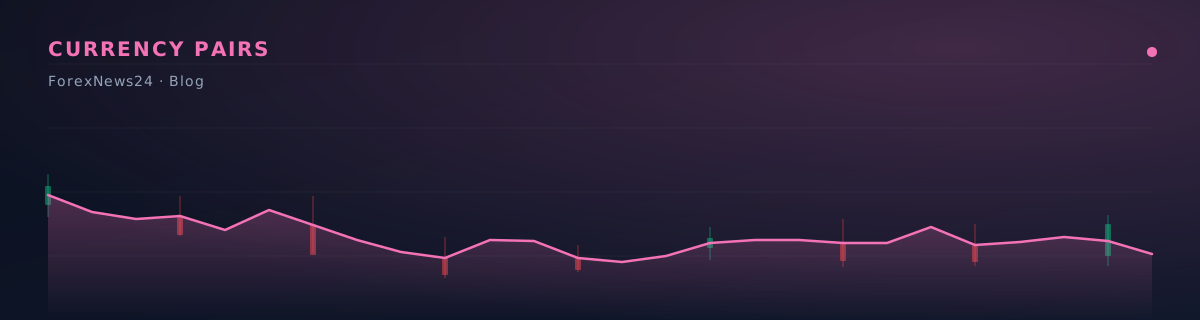
NZD/USD moves a median of 42 pips per day. Half of all days fall between 30 and 60 pips, and the widest day in our sample reached 130. Traders call it kiwi. Every figure below comes from 518 daily bars covering 2024-07-29 to 2026-07-30.
NZD/USD character: how the pair behaves
The New Zealand dollar behaves like a smaller, thinner version of the Australian. It follows the same risk-appetite logic but with less liquidity, which means wider spreads and sharper spikes on the same news.
Measured daily range
- Median daily range: 42 pips
- Typical band (middle 80% of days): 30–60 pips
- Widest single day in sample: 130 pips
- Median close-to-close change: 22 pips; the largest 20% of days exceed 43
- Range of the pair over the whole period: 0.5518–0.6352, a span of 834 pips
The gap between the median range and the widest day is the number worth remembering. A stop sized for a typical day is not a stop sized for the tail, and the tail is where accounts are damaged.
When it trades
Asian hours, alongside the aussie. New Zealand data is less frequent than Australian, so each release carries more new information.
Who it suits
Only worth trading if you accept thinner liquidity. Position sizes that are comfortable on AUD/USD are not automatically comfortable here.
Sizing a position on NZD/USD
Thin liquidity means the gap between the median day and a bad day is wider than the numbers alone suggest, because execution deteriorates at the same time. Treat the measured range as optimistic and size below what it implies.
Data: 518 daily bars, 2 incomplete bars excluded. The sample is available for download and the method is described in how we run backtests. What actually moves this pair is covered separately in what drives NZD/USD.
One practical difference from the Australian dollar is worth stating plainly: the same position size does not carry the same risk here. Thinner liquidity means the spread widens further at the moments you are most likely to need an exit, so the gap between a planned and an actual result is wider than the range figures alone suggest.
This material is educational and is not individual investment advice. Trading forex carries the risk of losing capital.
Frequently asked questions
How does NZD/USD differ from AUD/USD?
It follows the same risk logic with less liquidity, which means wider spreads and sharper spikes on equivalent news. Position sizes comfortable on the aussie are not automatically comfortable here.
What data moves the New Zealand dollar?
Reserve Bank of New Zealand decisions, dairy prices as the principal export, and Chinese demand. Domestic releases are less frequent than Australian ones, so each carries more new information.
Is NZD/USD suitable for beginners?
Less so than the majors. Thinner liquidity means execution is worse precisely when the market moves fastest.
New backtest studies — to your inbox
When a new reproducible study comes out or the data is updated, we send a short email. No spam, no "signals", no selling your address.
By leaving your email you agree to receive occasional emails from the portal. Unsubscribe in one click from any of them.